From centuries-old colonial homes to ornate Victorian estates, Gothic Revival churches, and striking modern buildings, Somerset County’s architecture reflects the many eras and influences that have shaped the region. Take a closer look as you explore grand civic buildings, historic homes, distinctive churches and more. You’ll find that unexpected architectural details can be found throughout the county. Whether you’re drawn to historic craftsmanship or contemporary design, there’s plenty worth stopping to admire.
Colonial Era Buildings and Structures

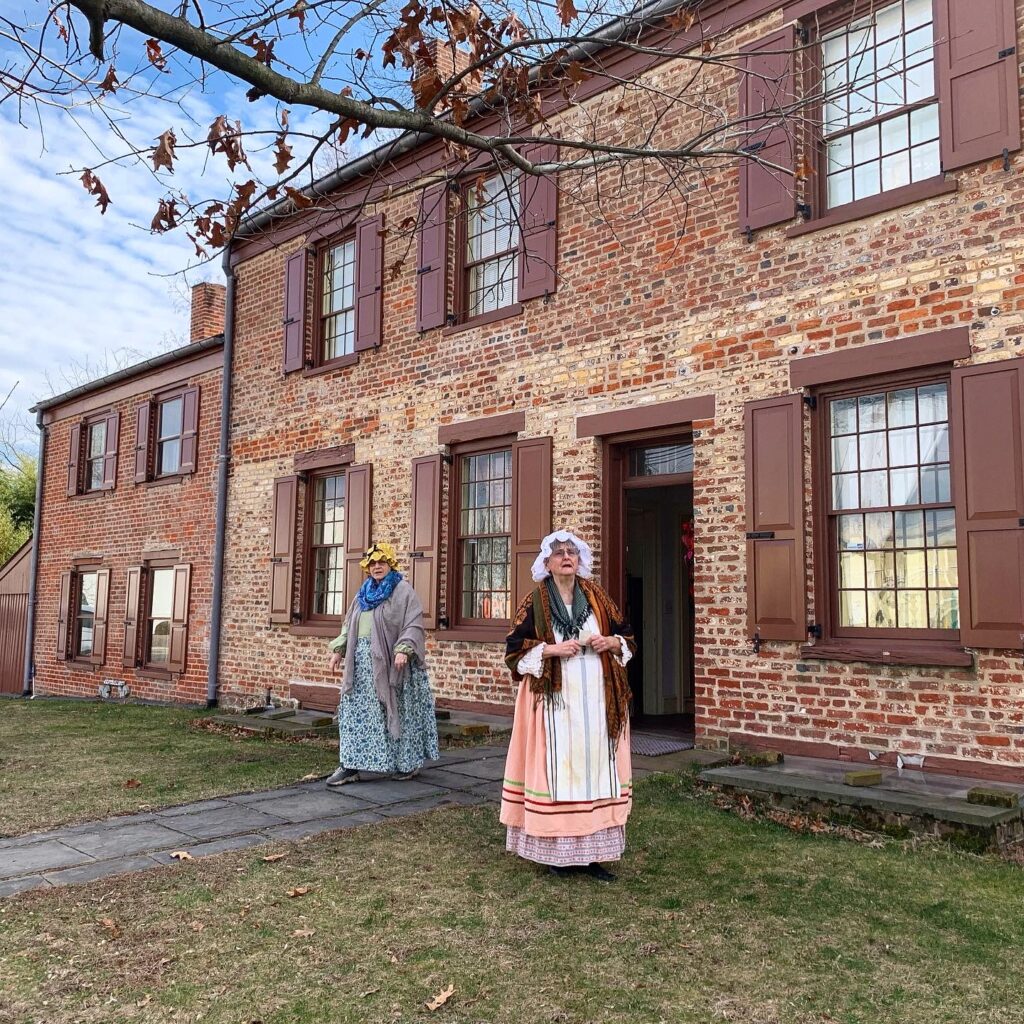


FIVE GENERALS’ HOUSES
Somerset County, NJ, played a pivotal role during the Revolutionary War, acting as a strategic hub for both military operations and the lodging of high-ranking Continental Army officers. Because of its proximity to key battlefronts and its location between Philadelphia and New York, Somerset County became a vital area for encampments and rest stops. Many notable generals, including George Washington, stayed in local homes and taverns throughout the region, turning these locations into important historical sites. The presence of these leaders not only influenced military strategies but also connected Somerset County to the broader struggle for American independence, cementing its place in the revolutionary narrative.
Take a closer look here at each of these houses, who stayed where, and their significance.

Rockingham House
This house holds significant importance to the Revolutionary War, serving as George Washington’s final wartime headquarters. During his time at Rockingham, General Washington entertained frequently, including individuals such as James Madison, Elias Boudinot, General Lincoln, Thomas Paine, and so many more.
Rockingham is operated by the State of New Jersey, Division of Parks & Forestry.

Old Stone Arch Bridge
Widely considered to be the oldest bridge in the state (and second oldest in the country) and an example of colonial highway engineering. While currently buried (with forthcoming plans to interpret the bridge) at the Bound Brook Battlefield, this bridge measures over 80 feet in length and features three massive stone arches. It is believed to have been constructed as early as 1731, functioned as a major colonial-era roadway, and was the site of the Battle of Bound Brook.
Victorian

Van Liew-Suydam House (Franklin)
The Van-Liew Suydam House offers a beautiful glimpse into Somerset County’s agricultural past. Originally settled by the Van Liew family in the 1700s, the house’s largest and most distinctive section was built in 1875 by Peter Suydam and showcases ornate Victorian-Italianate woodwork and craftsmanship. Today, the restored historic home is stewarded by the Meadows Foundation and serves as a setting for tours, educational programs and special events. Its sweeping countryside views, historic character and picturesque grounds make it a memorable stop for anyone exploring Somerset County’s heritage.

Tulipwood (Franklin)
Step into Somerset County’s Gilded Age at Tulipwood, a beautifully preserved 1892 country estate in Franklin Township. Designed by architect J. August Lienau for New York attorney Stephen Guion Williams, the home is a rare Somerset County example of Shingle Style architecture, with a distinctive gambrel roof, graceful porch and intricate historic details throughout. Once part of the Whitehaven Farms estate, Tulipwood was later preserved by Franklin Township and the Meadows Foundation and is now listed on the National Register of Historic Places.
Gothic / Gothic Revival

St. John’s Episcopal Church (Somerville)
A striking example of Victorian-era architecture in downtown Somerville, St. John’s Episcopal Church was designed by renowned architect Horace Trumbauer and completed in 1895. Its Gothic Revival design features pointed arches, intricate stone detailing and an impressive tower, while the interior is distinguished by a collection of historic stained-glass windows, including several created by Tiffany Studios. Together, the church and its rectory form an important part of Somerville’s historic architectural landscape and reflect the borough’s prosperity and growth at the turn of the 20th century.
Daniel Robert Mansion (Somerville)
Now home to Somerville Borough Hall, the Daniel Robert House was built in 1888 for businessman Daniel Robert and is one of Somerset County’s most distinctive examples of Gothic Revival architecture. Designed by Lambert and Bunnell, the house is a faithful replica of an 1846 design by American architect Alexander Jackson Davis; and because the original Davis-designed mansion was demolished in the 1950s, Somerville’s Daniel Robert House is now the sole surviving example of the design. Its steep rooflines, pointed arches, brownstone details and dramatic asymmetrical form give the mansion its unmistakable Victorian character.
Beaux-Arts / Classical

Somerset County Courthouse (Somerville)
Standing at the heart of Somerville’s historic Courthouse Green, the Somerset County Courthouse is a remarkable example of early 20th-century Beaux-Arts architecture. Completed in 1909, the white Alabama marble courthouse was designed by nationally prominent architect James Reilly Gordon, whose work can also be found in courthouses and public buildings across the country. Its grand marble exterior, formal symmetry and monumental presence contrast beautifully with the surrounding historic buildings and green space, making the Courthouse Green one of downtown Somerville’s most distinctive architectural landmarks.
Tudor Revival

Natirar (Peapack & Gladstone)
Set among rolling hills, woodlands and the North Branch of the Raritan River, Natirar began as the grand country estate of Walter Graeme Ladd and Kate Macy Ladd. The Ladds assembled nearly 1,000 acres beginning in 1905 and commissioned architects Guy Lowell and Henry Janeway Hardenbergh to create an impressive Tudor-style mansion, completed in 1912. Built of brick with limestone trim and a slate roof, the mansion features rich oak paneling, molded plaster ceilings, stone fireplaces, leaded-glass windows and heraldic details. The estate later served as a convalescent home, became a residence associated with the royal family of Morocco, and was ultimately acquired by Somerset County in 2003. Today, Natirar’s historic architecture and expansive landscape remain among the defining treasures of the Somerset Hills.